
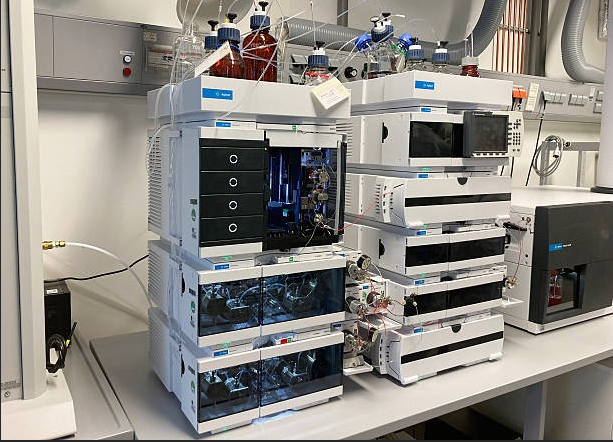
A peptide sample may look straightforward, but proving exactly what is present can be far more complex. Small differences can matter, and relying on a single analytical result may leave important questions unanswered. That is why peptide characterization requires a deeper level of verification, especially when purity, identity, and consistency are critical.
However, the real value emerges when different analytical methods begin to support one another. Their combined insights can reveal details that may otherwise remain hidden, making the overall evaluation more reliable and meaningful. Understanding how this partnership works helps explain why these techniques are so widely used in peptide analysis.
Key Takeaways
- HPLC separates peptide components before molecular analysis.
- Mass spectrometry adds molecular identity and structural evidence.
- LC-MS links chromatographic peaks with specific molecular species.
- MS/MS supports deeper investigation of sequence and modifications.
- Combined analysis strengthens confidence in peptide quality assessments.
How HPLC And Mass Spectrometry Complement Each Other
HPLC and mass spectrometry serve distinct yet closely related analytical roles in peptide characterization.
HPLC is primarily responsible for separating components within a sample. As the sample passes through a chromatographic column, different compounds interact with the stationary phase and mobile phase at different rates.
Mass spectrometry then examines the separated compounds based on their mass-to-charge ratios.
Together, the two techniques can provide information about:
- Chromatographic purity
- Peptide molecular mass
- Impurity profiles
- Modified peptide species
- Degradation products
- Batch consistency
This complementary relationship is important because a chromatographic peak alone does not always prove molecular identity, while mass data without sufficient separation may be harder to interpret.
How HPLC And Mass Spectrometry Work Together Throughout Peptide Analysis
Step 1: HPLC Separates the Components in a Peptide Sample
Reversed-phase HPLC is commonly used for peptide analysis because peptide hydrophobicity varies with amino acid composition and sequence.
As the mobile-phase composition changes, compounds move through the column at different rates and appear as separate peaks in the chromatogram.
The resulting profile can reveal whether a sample contains one dominant component or several detectable species.
Secondary peaks may indicate:
- Truncated peptide sequences
- Synthesis-related impurities
- Chemically modified species
- Degradation products
- Other sample contaminants
For quality peptides, this chromatographic profile provides an important first view of sample composition. However, HPLC alone cannot always determine exactly what each peak represents.
Step 2: Mass Spectrometry Confirms Molecular Mass
After chromatographic separation, mass spectrometry can provide molecular information about the material associated with each peak.
Peptides are ionized before entering the mass spectrometer. The instrument then detects those ions according to their mass-to-charge ratio.
Because peptides often produce multiple charge states, analytical software can use those signals to determine the peptide’s molecular mass.
The measured mass can then be compared with the theoretical mass expected from the intended amino acid sequence.
A close match supports the expected molecular identity. Differences may indicate:
- Sequence-related errors
- Chemical modifications
- Degradation
- Unexpected molecular species
- Synthesis byproducts
This step adds an important level of confirmation to peptide characterization that chromatographic retention time alone cannot provide.
Step 3: LC-MS Connects Each Peak with Molecular Information
When HPLC is directly connected to a mass spectrometer, the combined method is commonly referred to as LC-MS.
This configuration allows compounds to move from the chromatographic column directly into the mass spectrometer.
As a result, analysts can connect:
Retention time + chromatographic peak + molecular mass
For example, an HPLC chromatogram may show one large peak and two smaller peaks. LC-MS can help determine whether the large peak corresponds to the expected peptide and whether the smaller peaks represent modified, shortened, or degraded forms.
This makes interpretation more precise because analysts are no longer evaluating chromatography and mass data independently.
Step 4: MS/MS Provides Additional Structural Information
In some cases, molecular mass alone is not enough to fully characterize a peptide.
Tandem mass spectrometry, commonly called MS/MS, can provide additional structural information by fragmenting a selected peptide ion and analyzing the resulting fragments.
The fragment-ion pattern can help support:
- Amino acid sequence confirmation
- Modification identification
- Impurity characterization
- Degradation analysis
- Differentiation between related peptide species
This capability is particularly useful when analyzing peptide blends, in which multiple peptide components may be present in the same preparation.
MS/MS can provide another layer of evidence when individual molecular species need to be distinguished with greater precision.
Step 5: HPLC Helps Evaluate Purity
HPLC is frequently used to assess chromatographic purity by examining the relative peak size and number.
A sample with a single dominant peak and only minor secondary peaks may indicate relatively high chromatographic purity under the specific analytical conditions used.
However, peak-area percentages should not automatically be treated as absolute chemical purity.
Different substances may produce different detector responses, and some impurities may not be detected equally well.
For this reason, purity results are more informative when they are interpreted alongside mass spectrometry data during peptide characterization.
When evaluating materials such as regenerative peptides, a combination of approaches can help distinguish the intended peptide from related molecular species rather than relying solely on a headline purity percentage.
Step 6: Mass Spectrometry Helps Identify Impurity Peaks
HPLC can reveal the presence of an impurity, but mass spectrometry can help determine what that impurity may be.
When an unexpected chromatographic peak appears, its mass spectrum can be examined and compared with known or predicted molecular species.
This can help analysts investigate whether the impurity represents:
- A shortened sequence
- An oxidized peptide
- A modified form
- A degradation product
- A synthesis-related species
This distinction is important because two samples can have similar overall purity percentages while containing very different impurity profiles.
Therefore, impurity identification can provide more meaningful analytical information than simply reporting the total number of secondary peaks.
Step 7: HPLC And MS Support Batch-to-Batch Comparison
Once a peptide has an established analytical profile, HPLC and mass spectrometry can also be used to compare future batches.
Analysts may review whether different batches show similar:
- Retention times
- Main chromatographic peaks
- Secondary peak patterns
- Molecular masses
- Relative component profiles
If a new peak appears in one batch, mass spectrometry can help determine whether it represents a meaningful new molecular species.
For a defined material such as ipamorelin peptide, this type of comparison can support consistency assessments by showing whether expected chromatographic and molecular characteristics remain stable between batches.
Why Both Techniques are Needed for Complete Analysis
Neither HPLC nor mass spectrometry answers every characterization question by itself.
HPLC is highly useful for separating compounds and evaluating chromatographic profiles, but it does not always confirm molecular identity.
Mass spectrometry provides highly specific molecular information, but complex mixtures can be more difficult to interpret without prior separation.
Together, they provide a logical workflow:
- Separate the sample components with HPLC.
- Record chromatographic retention times and peaks.
- Measure molecular masses with mass spectrometry.
- Match major peaks with expected molecular species.
- Investigate unexpected or secondary peaks.
- Use MS/MS when deeper structural confirmation is necessary.
- Compare analytical profiles across samples or batches.
This combined process makes peptide characterization more reliable because multiple types of analytical evidence are evaluated together.
Conclusion
HPLC and mass spectrometry provide complementary analytical strengths that make peptide testing more informative and precise. HPLC separates individual components and reveals chromatographic patterns, while mass spectrometry adds molecular and structural evidence that helps explain what those peaks represent. When used together, these methods support a more confident evaluation of identity, purity, consistency, and unexpected changes in samples. Peptide characterization benefits from this combined approach, as laboratories can interpret multiple analytical signals within a single coordinated workflow.
As analytical expectations become more rigorous, integrating chromatographic separation with mass-based detection remains an effective way to achieve a clearer, more complete understanding of peptide samples.
Choose VB Peptides for peptide products supported by a quality-focused research approach.
FAQs
What sample preparation factors can affect HPLC-MS results?
Sample concentration, solvent compatibility, filtration, and contamination can influence chromatography and ionization. Careful preparation helps reduce signal interference and improve analytical consistency.
Why is electrospray ionization commonly used for peptide analysis?
Electrospray ionization works well with liquid chromatography and can generate multiply charged peptide ions, making larger peptide molecules easier to detect within useful mass ranges.
Can mobile-phase additives influence mass spectrometry performance?
Yes. Certain buffers and salts may suppress ionization or contaminate the instrument, so LC-MS methods typically use volatile additives compatible with mass spectrometry.
How does instrument calibration affect peptide mass accuracy?
Regular calibration helps ensure measured mass-to-charge values remain accurate. Poor calibration can introduce mass errors that complicate peptide identification and comparison.
Why are reference standards useful in peptide testing?
Reference standards provide known analytical benchmarks for retention behavior, molecular mass, and method performance, helping laboratories evaluate whether a test system is operating as expected.